
Vertical
One crossing of the pay zone.
The borehole passes through the reservoir at a single interval. Historically common. Still used where geology and economics support it.
01 · The well
A producing well is an engineered wellbore into a hydrocarbon-bearing formation. The working-interest owner acquires a participating interest in that well.
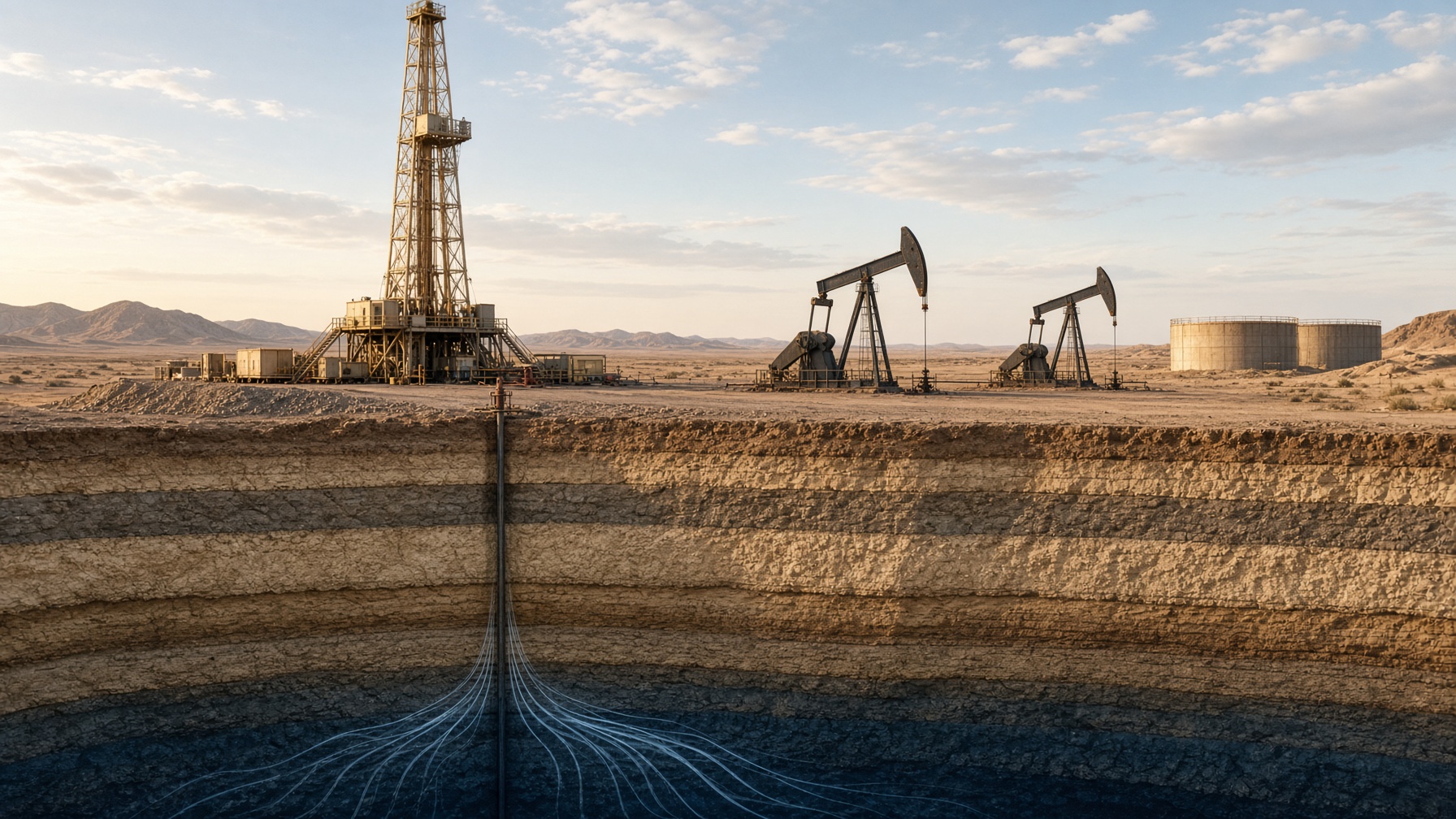
The operator drills vertically to depth, then typically turns the well and drills a lateral through the reservoir. That lateral is where most of the production comes from.
Completion follows: casing, cement, and stimulation so the reservoir can flow to surface. The working-interest owner acquires a participating interest in that well — a proportionate share of production, and a proportionate share of the cost to drill it.
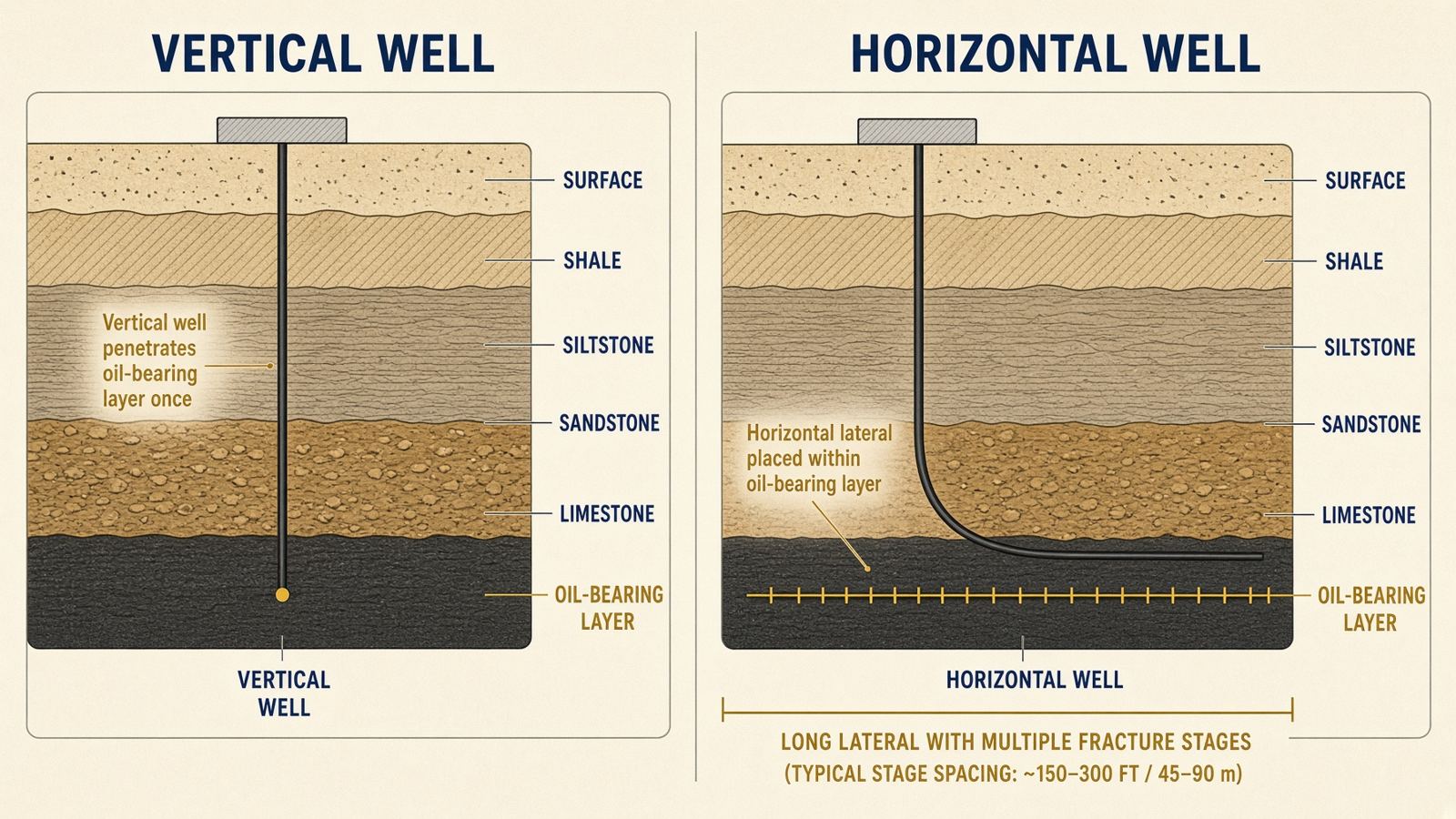
A vertical well crosses the reservoir at one point. A horizontal well turns and remains in that reservoir for thousands of feet. Multi-stage fracturing then opens the rock so hydrocarbons can flow.
Vertical
The borehole passes through the reservoir at a single interval. Historically common. Still used where geology and economics support it.
Horizontal
EIA reports that horizontally drilled wells rose from 10% of U.S. producing wells in 2014 to 22% in 2024. Multi-stage fracturing is how most tight-oil wells are completed.
Educational material only. Not an offer to sell a security. Not tax, legal, or investment advice.